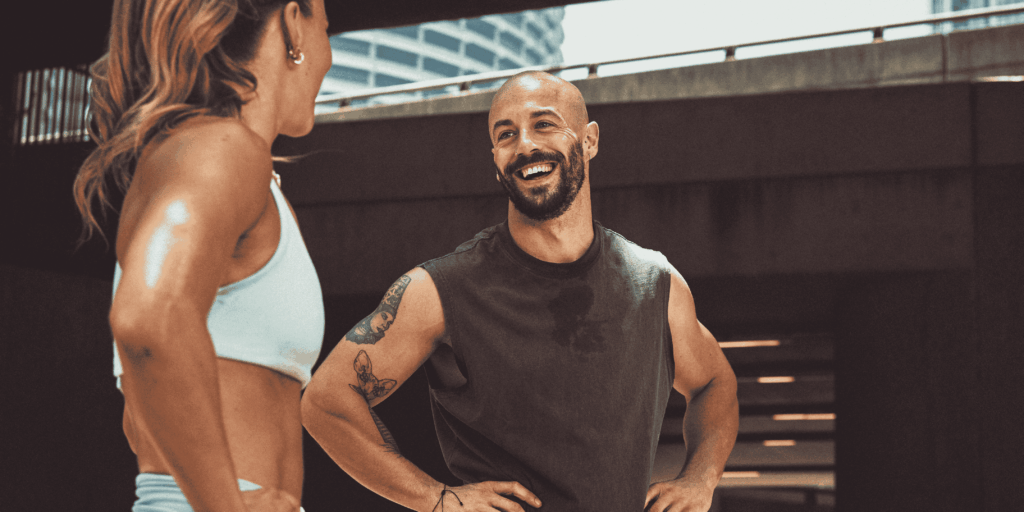
What Makes a Great Personal Trainer? Skills, Qualifications & Career Guide
What Makes a Great Personal Trainer? Skills, Qualifications & Career Guide
By One Playground
Becoming a fitness coach or personal trainer is one of the most rewarding career decisions you can make. You get to do meaningful work every day, help people transform their lives, and build a business around something you genuinely love.
But it’s also a career that can go sideways fast if you start without the right preparation. The personal training industry has one of the highest dropout rates of any profession – around 50% of new coaches leave within the first two years. The good news? With the right education and the right support, you can be the other 50%.
This is your complete guide to what it actually takes to become a great coach and build a sustainable career in fitness.
If you’re still deciding whether coaching is the right career path, you might also want to read our article on whether personal training is actually a good career.
Step 1: Get Your Qualification – But Choose Wisely
In Australia, you’ll need to complete a Certificate III and Certificate IV in Fitness to work as a personal trainer. This is your baseline qualification and the gateway to entering the industry.
If you’d like a full overview of the qualifications and pathway into the industry, you can read our guide on how to become a personal trainer in Australia.
But here’s the thing: not all qualifications are created equal.
Most courses today can be completed entirely online. You’ll study theory, submit assessments, and complete your practical requirements with friends, family, or fellow students who already know how to train. Then you’ll graduate and immediately be expected to coach real clients with real problems in a real gym.
The gap between those two experiences is enormous. And it’s why so many newly qualified coaches feel underprepared, overwhelmed, and unsupported in their first year.
When choosing your course, look for education that prioritises hands-on experience with genuine clients, mentorship from working professionals, and exposure to the realities of the industry before you graduate. The more time you spend coaching actual people during your training, the more confident and capable you’ll be the moment you step into your first paid session.
Step 2: Understand the Five Things a Great Coach Actually Needs
Most personal training courses focus heavily on the science of exercise: anatomy, physiology, and programming. That knowledge matters. But it’s far from the complete picture. A genuinely great coach needs to be across five key areas:
1. Coaching People (Not Just Bodies)
Before you can coach someone’s exercise, you need to understand them as a human being. What are their goals? Why do those goals matter to them? What are their frustrations, their fears, their lifestyle constraints? The more you know about a person, the more effectively you can help them.
This comes down to the quality of your questions and your ability to listen – and it’s a skill that takes real practice with real people.
2. Coaching Exercise
This is the technical foundation: how to design a program that’s appropriate for someone’s goals and current ability, how to assess movement, how to cue technique, and how to choose the right exercise at the right time for the right person. It takes both theoretical knowledge and hands-on practice to develop competence here.
3. Sustaining Change
You might see a client for one or two sessions a week – maybe 60 to 80 minutes in total. But there are 166 other hours in their week where your influence has to extend beyond the gym floor. Great coaches understand how to support clients in their nutrition, recovery, sleep, stress management, and daily habits. Your role is to create meaningful, lasting change, and exercise is just one vehicle for doing that.
4. Scaling a Business
At some point in your career, you’ll be running your own business. That means learning how to attract clients, retain clients, manage your schedule, track your performance, and build something that’s sustainable over the long term. Most personal training courses skip this entirely, and it’s one of the main reasons coaches leave the industry.
Business skills aren’t optional. They’re essential.
5. Professional Practice
Being a great coach also means operating at a high standard every day, with professionalism, consistency, and genuine care for the people you work with. This is how you build a reputation, earn referrals, and maintain long-term client relationships.
Step 3: Get Real Experience Before You Graduate
This cannot be overstated. The biggest predictor of a successful first year as a coach isn’t your exam results – it’s the amount of real coaching experience you accumulate before you step out on your own.
Seek out education that puts you in front of real clients during your training. Practice on people who aren’t athletes, who have injuries, who are nervous in the gym, who have never trained before. Learn what it feels like when a client is confused by your cue, when a movement assessment throws up something unexpected, when a session goes sideways, and you have to adapt in real time.
The more of those moments you experience in a supported environment, the less likely they are to derail you when they happen in the real world.
Some education programs are designed specifically around this principle, for example, OneCoach Academy, where students coach real clients in a gym environment during their training.
Step 4: Build Your Client Base from Day One
Getting clients is the first practical challenge every new coach faces. Here’s the honest truth: it won’t happen on its own. You need to be proactive.
Some things that genuinely work in your first year:
- Tell everyone you know. Friends, family, colleagues, gym members – let people know you’re qualified and taking on clients.
- Offer to help people for free or at a reduced rate initially. You’re building experience, testimonials, and referral relationships.
- Show up consistently. Be visible in your gym, be approachable, and demonstrate your expertise naturally in everyday interactions.
- Ask for referrals. Happy clients are your best marketing – but most won’t refer unless you ask.
- Build a simple social media presence. You don’t need to go viral. You just need people to be able to find you and see what you stand for.
- Run a good session. People are always watching. Be present & engaged with your clients. A great session is an undervalued marketing tool.
Step 5: Invest in Ongoing Development
The coaches who last in this industry – and who build genuinely great careers – are the ones who never stop learning. The field of exercise science evolves. Clients’ needs change. Your own skills will have gaps that only experience reveals.
Seek out mentors. Attend workshops and industry events. Pursue additional certifications in areas that interest you: nutrition, rehabilitation, strength and conditioning, and specific populations. The more strings you add to your bow, the more valuable you become and the more diverse the clients you can work with.
As one of our senior coaches, Matt Williams, puts it, there’s always more to learn, and being in a learning mindset is one of the things that makes this career so rewarding for the long haul.
The Reality of a Career in Personal Training
It’s an extraordinary career. The ability to change someone’s life – their confidence, their health, their relationship with their body, their performance at work and in relationships – is a privilege that very few professions offer.
We’ve seen coaches at One Playground work with clients for 16+ years. We’ve seen clients lose 50 kilos and say they feel like they could take on the world. We’ve seen people come into the gym unable to walk without pain and leave able to move freely for the first time in years. We’ve seen clients go from completely lacking in confidence to becoming team leaders, running marathons, and stepping completely outside their comfort zones.
None of that happens by accident. It happens because a coach showed up, asked the right questions, and committed to the long game.
If that’s the kind of work you want to do – get the best possible education behind you, choose your first role wisely, and give it everything.
Find out how OneCoach Academy’s Cert III & IV in Fitness, Certified Coach, prepares you for the reality of this career – with real clients, real gyms, and real support from day one.
More Articles
What is OneCoach Academy?
If you’ve been thinking about becoming a personal trainer, you’ve probably already started researching your options. Online courses. Weekend certifications. Study-from-home qualifications that promise to get you...
Is Personal Training a Good Career? What You Should Know First
You’ve been thinking about it for a while. Maybe you’re in a job that pays well but doesn’t fulfil you. Maybe fitness has always been your passion, and you’ve started wondering whether you could actually do this as a...
How to Become a Personal Trainer in Australia
If you’re passionate about fitness and helping people improve their health, becoming a personal trainer can be an incredibly rewarding career.